Feature|Articles|November 13, 2025
Improving Rural Cancer Care: Insights from Across the Americas
Fact checked by: Andrea Eleazar, MHS
Listen
0:00 / 0:00
Key Takeaways
- International collaboration is crucial for enhancing rural cancer care, with shared experiences and solutions from across the Americas.
- Major challenges in rural oncology include access to care, workforce shortages, and the digital divide, impacting service delivery.
Experts discuss the need for global collaboration to enhance cancer care in rural areas, addressing access, workforce challenges, and diverse patient needs.
There is a persistent need for a global perspective and international collaboration to improve cancer care, particularly in rural settings. A panel titled “Shared Solutions for Rural Oncology: Insights from Across the Americas” at the ACCC 42nd National Oncology Conference, helmed by Enrique Soto Perez de Celis, MD, PhD, FASCO, aimed to bring together voices from across the Americas with a goal to share common experiences, barriers, and potential solutions for providing better cancer care to rural patients.
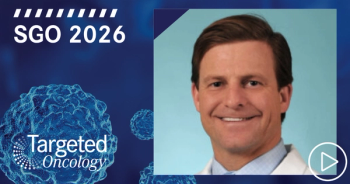
In an interview with Targeted Oncology, Soto Perez de Celis, associate director for Global Oncology, University Colorado Cancer Center, provided some background to the panel conversation and offered insights into the unique setting that is rural cancer care.
Targeted Oncology: Could you provide some background on your panel presentation at ACCC?
Enrique Soto Perez de Celis, MD, PhD: There has been an attempt to give ACCC a global perspective and figure out how we can learn from experiences from other countries. Last year, we had a panel with people from all around the world that I think was very good. A lot was learned and a lot of ideas were shared. The idea [now] is to go deeper and to try to foster that international collaboration and bring international knowledge into ACCC. This year, the meeting [was] in Colorado, which is where I work, and where we have a large rural population. We are a very large, diverse state, geographically and culturally. We have a lot of populations that depend on agriculture and that work in agriculture, and importantly, we have a lot of migrant populations that dedicate their lives to agriculture. Youhave to think of [rural] populations that are from all across the Americas. The idea of this panel [was] to have representatives from Canada, the United States, Mexico and Guatemala to share common experiences, barriers, and solutions to provide better care for [patients] with cancer living in rural areas in the Americas.
How did your panel bring together these voices from different areas?
We brought [Joaquin Barnoya, MD, MPH], Minister of Public Health and Social Assistance of Guatemala, so we had this very high-level perspective from a country that is mostly rural. Jacqueline Galica, [RN, BScN, MSc, PhD] is a nurse [and associate professor at Queens University]in Canada, so we had the nursing perspective and [discuss] how to implement change in a huge country where services are very far apart. We also had [Wade] Swenson, [MD, MPH, MBA, founder of the Rural Cancer Institute] from the US. He's in the frontline of rural care. [We also had Yanin Chavarri-Guerra, MD, PhD, full professor of oncology and clinical researcher at Instituto Nacional de CienciasMédicas y Nutrición Salvador Zubrián] of Mexico.
What do you see as the biggest challenges in rural cancer care?
One is access. Of course, that is always a problem for rural populations. This has to do with travel, the cost of care, and currently, the digital divide. A lot of the things that we're thinking of regarding how to bring care to rural populations is using digital health, telemedicine, etc—is that something that can actually be implemented in rural settings across the Americas, or are we widening this divide? Because we're not reaching a lot of people who may not be technologically savvy.
[Second] is the workforce. It is hard to train, recruit, and retain frontline providers, including physicians, nurses, [and] community healthcare workers in rural areas. Wehave to figure out solutions that work across settingsto bring those healthcare providers to the places where they are needed the most. An important thing in this in this area is task sharing.Are some of the tasks that, in urban areas done by physicians, be done by other healthcare providers in rural settings where physicians may not be available?
Another part is the trajectory of cancer care. We may be doing outreach and screening, but that only works if patients can actually reach therapy. So, what are the strategies in order to bring people living in rural areas to places where they can receive high-quality cancer care? Bringing patients to the clinic, or bringing the clinic to the patients?
[Just because populations] are rural does not make them uniform. There are intersecting factors such as gender, age, language, socioeconomic context, [and] migratory status within rural populations that make them very diverse. One size does not fit all for rural communities.
This interview was edited for clarity.
REFERENCE
Soto E. Shared Solutions for Rural Oncology: Insights from Across the Americas. Presented at: ACCC 42nd National Oncology Conference; October 15–17, 2025; Denver, Colorado.
Related Content
Advertisement