Commentary|Articles|December 1, 2025
Holding and Bridging Therapies Are Essential Parts of CAR T Process
Author(s)Targeted Oncology Staff
Fact checked by: Jonah Feldman
Listen
0:00 / 0:00
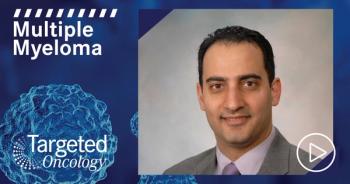
During a live event, Thomas G. Martin, MD, discussed the importance of controlling disease and avoiding barriers to access so patients with multiple myeloma can receive CAR T-cell therapy.
As access to chimeric antigen receptor (CAR) T-cell therapies expand to more patients with multiple myeloma, oncologists need to make determinizations about whether each patient is eligible and what therapy is needed to ensure they are able to receive treatment and get the best possible response. During a Case-Based Roundtable meeting in Houston, Texas, Thomas G. Martin, MD, clinical research director of hematologic malignancies at the UCSF Helen Diller Family Comprehensive Cancer Center in San Francisco, discussed the long-term safety update from CARTITUDE-1 (NCT03548207) and International Myeloma Working Group (IMWG) recommendations for the use of both holding and bridging therapies. He also emphasized the ongoing changes to travel and monitoring restrictions that aim to make cellular therapy available to more patients.
Targeted Oncology: What safety concerns were seen with ciltacabtagene autoleucel (cilta-cel; Carvykti) over 5 years of follow-up from the CARTITUDE-1 trial?
Thomas G. Martin, MD: Some of the later toxicities that we’ve seen are that some patients have developed secondary malignancies. Some of it is skin cancer. I don’t think I have a CAR T-cell patient who is out 3 to 5 years who has not had something removed from their skin in California…that’s not that big of a deal. But there have been some hematologic malignancies. There’s been some myelodysplastic syndrome [MDS], there’s been some leukemia, and in the original study, 10 patients had either MDS or leukemia.1
This was [investigated in patients with] 6 prior lines of therapy. They had a lot of alkylators before that. The majority of the patients had stem cell transplant[s]. Patients who had stem cell transplant[s] have a higher risk of getting these secondary malignancies. The truth of the matter is the patients are living longer. But there was no incidence of any new parkinsonism or new cranial nerve palsies; [those are some of] the delayed toxicities. There were some patients who had grade 3 infections. They got pneumonia and had to go in. Some of the patients…still have hypogammaglobulinemia, and you need to support them with intravenous immunoglobulin [IVIG], sometimes even for 2, 3, or 4 years. One of my 5-year survivors is still intermittently getting IVIG every 3 or 4 months to try to keep their IgG level greater than 4 g/dL.
What are the IMWG recommendations for sequencing therapies?
This IMWG guidelines…are for general immunotherapies but is focused a lot on CAR T-cell therapy.2 They came up with a couple new terms. One was the term “holding therapy” [before apheresis]. In the
But before they have the leukapheresis, it is key that you don’t give them anything that’s going to be toxic to their lymphocytes, because all the data are coming out that the people who have long-term responses when the T cells go back in, they expand, and they’re healthy T cells. Those T cells that are exhausted and not healthy are the ones of the patients who are having relapse. Exhausted T cells tend to be those that have been treated with high-dose alkylator-based therapy, high-dose cyclophosphamide…. We don’t use bendamustine anymore. That’s not in our armamentarium in my mind. If you are thinking of CAR T or bispecific [antibodies], bendamustine is the last-ditch effort. Other than that, there’s no role for bendamustine. I don’t even think there’s a role for that in lymphodepletion, because we had some real-world evidence mostly with idecabtagene vicleucel [ide-cel; Abecma], because when we lost fludarabine for a little period of time [in 2022], and patients got bendamustine, they had a lower progression-free survival compared with those who did got fludarabine and cyclophosphamide.3 If you had to use it with cilta-cel, I would just use cyclophosphamide…if you had to skip the fludarabine.
The other holding therapy [recommendation] is that we don’t do is bispecifics as holding therapy because you are continuously activating the T cells, and you might be exhausting the T cells prior to collection, and you’re likely to get an out-of-specification product. They still can collect T cells, and they can still send them off to the company, and they can still try to do expansion, but what comes back, typically, is a very a low dose, and often the viability of the cells is low. You could potentially give that to the patients. I never give it if they have a low dose. If it’s just the percentage of viability is 70% to 76%, that’s fine, because that’s what we did in the trial.
So, we have holding therapy before they get their apheresis, and every patient before they get a CAR T-cell therapy should be evaluated for [whether they] need holding therapy before you send them off for a consult out to…the academic center. We wish we could get everybody in tomorrow and get them evaluated and get their apheresis the next day, but that is not how it works. There’s insurance authorization, there’s a spot that you need in your apheresis center, and you need your laboratory to be able to get the cells and send them off to the company.
For patients with rapidly progressive disease, and you think there’s no chance that person is going to make it to wait for a consult for 4 weeks, etc, then that might not be the right timing. If we’re doing it in an earlier line of therapy, like second or third line, we have plenty of other drugs to use. We can use another drug first, get their disease under control, and then do the CAR T cells later, [after we] get their disease under control. Nobody with rapidly progressive disease should be sent to the academic center specifically to [determine if] they’re going to be good for a CAR T-cell therapy.
What has been done to reduce the burden on patients getting CAR T-cell therapy?
One of the things that prevented people from getting to CAR T-cell therapy [were the logistics] that patients ha[d] to go through. Patients weren’t supposed to drive for 8 weeks. Beforehand, a lot of people said, “I can’t not drive for 8 weeks,” and people would choose not to do it. The other thing is that we were required to monitor them very closely for 10 days, and also [patients had] to stay [near] the treatment center for 4 weeks.
We know people aren’t going to do that, because we have to report our results and we want to know if they have delayed toxicities. But patients only need to stay 2 weeks near the treatment center, and only 7 days of very close monitoring. That’s daily blood tests. The FDA has relaxed that with the hope that it could be better access.
I think it does help. We have a sister site in Fresno, which is 3.5 hours away, and so we’re trying to figure out how we’re going to work with Fresno so that we can do the CAR T cells. We would love for Fresno to be able to do the lymphodepletion therapy, then send them [to San Francisco] for the infusion. They get the infusion, they stay in the hospital for 10 days, and we send them right back to Fresno for them to care for them. The hard part is that the Foundation for the Accreditation of Cellular Therapy [FACT] regulatory board doesn’t allow for that right now, even though the FDA says we can do that. …We’re hoping FACT gets better and grows with the times.
DISCLOSURES: Martin previously reported receiving honoraria from GSK, Sanofi, Amgen, and Janssen.
REFERENCES
1. Jagannath S, Martin TG, Lin Y, et al. Long-term (≥5-year) remission and survival after treatment with ciltacabtagene autoleucel in CARTITUDE-1 patients with relapsed/refractory multiple myeloma. J Clin Oncol. 2025;43(25):2766-2771. doi:10.1200/JCO-25-00760
2. Costa LJ, Banerjee R, Mian H, et al. International Myeloma Working Group immunotherapy committee recommendation on sequencing immunotherapy for treatment of multiple myeloma. Leukemia. 2025;39(3):543-554. doi:10.1038/s41375-024-02482-6
3. Ravi G, Bal S, Godby K, et al. Bendamustine lymphodepletion (LD) prior to idecabtagene vicleucel (ide-cel) is associated with inferior outcomes in relapsed refractory multiple myeloma (RRMM). Blood. 2023;142(suppl 1):6920. doi: 10.1182/blood-2023-188323
4. FDA Eliminates Risk Evaluation and Mitigation Strategies (REMS) for Autologous Chimeric Antigen Receptor (CAR) T cell Immunotherapies. FDA. June 26, 2025. Accessed October 24, 2025. https://tinyurl.com/yu46ysuw
Related Content
Advertisement