Commentary|Videos|July 29, 2025
Fertility Preservation in Patients With Cancer: Key Takeaways for Oncologists
Author(s)Katherine McDaniel, MD
Fact checked by: Sabrina Serani
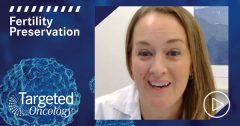
Katherine McDaniel, MD, a reproductive endocrinologist, discusses the key takeaways for oncologists treating patients of reproductive age.
In an interview with Targeted Oncology, Katherine McDaniel, MD, reproductive endocrinologist at the University of Southern California and HRC Fertility, discusses key takeaways for oncologists who may be treating patients of reproductive age and counseling them on fertility preservation.
In alignment with the American Society of Clinical Oncology (ASCO) guidelines, it is essential that all patients of reproductive age receive counseling on the potential impact of cancer treatments—such as chemotherapy, radiation, or surgery—on their fertility. These therapies can significantly affect future reproductive potential, and early intervention is crucial to preserving options for family-building.
As a fertility specialist, McDaniel emphasizes that timing is everything. The moment a cancer diagnosis is confirmed in a reproductive-age patient, immediate referral to a fertility specialist should be a priority. Whether through a quick phone call, email, or electronic referral, the sooner fertility specialists are involved, the better they can support the patient without delaying their cancer treatment.
Fertility care clinics are highly sensitive to the urgency of these cases, and providers understand that cancer treatment plans often move rapidly, and fertility preservation must be efficiently integrated into the patient’s care timeline. McDaniel notes that she and her colleagues strive to see patients within 24 hours of their referral, adjusting their schedules as needed to accommodate these time-sensitive cases.
One key message McDaniel wants to convey to oncologists is that fertility preservation does not have to cause delays. In many cases, specialists can initiate the process on the very first visit, whether that involves egg/embryo freezing, sperm banking, or other fertility-preserving interventions. The entire process—from initial consultation to completion—can often be wrapped up within 2 weeks, ensuring minimal disruption to the patient’s cancer treatment schedule.
McDaniel's goal is to remove barriers and provide seamless, expedited care. Reproductive endocrinologists and fertility experts recognize that every day counts and are committed to working collaboratively with oncology teams to ensure that fertility preservation does not become an obstacle to timely cancer therapy.
Related Content
Advertisement