News|Articles|July 17, 2025
Exploring Glioblastoma Resistance Using Spatial Genomics
Author(s)Sabrina Serani
Fact checked by: Jordyn Sava, Gabriel Zada, MD
Listen
0:00 / 0:00
Key Takeaways
- Glioblastoma's resistance to treatment necessitates research into tumor biology and heterogeneity for improved therapies.
- The 10x Spatial Profiling Platform enables near single-cell level analysis of gene expression, preserving spatial tissue organization.
Researchers explore glioblastoma's genetic complexity using innovative spatial profiling, aiming to enhance treatment strategies and understand tumor resistance.
Glioblastoma remains one of the most aggressive and treatment-resistant brain tumors in oncology. Researchers are seeking not only more effective treatments but also a deeper understanding of the tumor's biology.
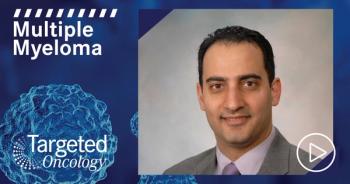
In an interview with Targeted Oncology, Gabriel Zada, MD, a neurosurgeon and researcher at the USC Keck School of Medicine, discussed his team’s recent work using a novel spatial profiling platform to study glioma heterogeneity and what the findings could mean for future therapies.
Targeted Oncology: What prompted this line of research?
Gabriel Zada, MD: Gliomas and glioblastomas are very challenging tumors to treat. We do not have definitive or durable therapies, and there are no cures. For glioblastoma, the average survival time is around a year and a half. So, any research that offers insights into why these tumors are so resistant to treatments is crucial.
Our goal was to study the heterogeneity of these tumors using a novel technique called the 10x Spatial Profiling Platform. This tool allows us to analyze gene expression in the tumor on a near single cell level while preserving the spatial organization of the tissue—not just in bulk, but as it exists in situ. That spatial component was central to our research.
The 10x Spatial Profiling Platform is quite new and has not been used extensively in glioblastoma. We combined it with other next generation sequencing protocols and were able to compare and validate the results.
At the USC Brain Tumor Center, when we surgically remove tumors, we routinely send them for genomic analysis and keep them alive in culture to assess them for personalized drug testing. That has become part of our standard workflow, allowing us to link translational experiments directly to clinical cases.
Could you walk through some of your findings?
We studied a variety of gliomas, starting with an initial cohort and then validating our results with a second set. First, we confirmed that spatial mapping was successful. We were able to visually and genomically detect heterogeneity in gene expression throughout the tumors and their surrounding microenvironments.
One of our most compelling findings involved the EGFR gene, which is well known in cancer research and particularly in glioblastoma. We found that EGFR is sometimes amplified not just within chromosomes, but in extrachromosomal DNA. These are fragments of DNA outside of the normal chromosomal structure, and they can act like rogue agents, hiding out and expressing genes that contribute to tumor resistance and heterogeneity. So, the study was twofold: we validated the spatial profiling method and uncovered new insights into the genetic architecture of these tumors.
What new questions or research directions emerged from your findings?
This was essentially a proof-of-principle study, and it gave us critical insights into genes like EGFR and the role of extrachromosomal DNA in treatment resistance. Our next step is to scale up: analyzing more tumors, studying additional genes, and comparing resistant tumors with those that respond better to treatment.
We’re also interested in how these genetic elements interact with the tumor’s microenvironment. Understanding those interactions might help us develop treatment strategies that modify the immune response or the tumor’s surrounding environment to make therapies more effective.
How might this tool be used in clinical practice in the future?
Right now, the technology is primarily diagnostic and potentially prognostic. It can tell us how homogeneous or heterogeneous a tumor is, and which genes are active in specific regions. Looking ahead, this could lay the foundation for more targeted treatments, whether through gene modulation, RNA therapies, or vaccines.
What’s particularly exciting is the potential to target not just specific genes, but also their compartments, whether they reside in chromosomal or extrachromosomal DNA. That is where the epigenetic component becomes critical.
REFERENCE:
Webb MG, Chow G, McCullough CG, et al. Resolving spatial subclonal genomic heterogeneity of loss of heterozygosity and extrachromosomal DNA in gliomas. Nat Commun. 2025;16(1):5290. Published 2025 Jun 13. doi:10.1038/s41467-025-59805-z
Related Content
Advertisement