
Aaron T. Gerds, MD, MS, explains the current remaining unmet needs in the treatment of patients with myelofibrosis.
Aaron T. Gerds, MD, MS, explains the current remaining unmet needs in the treatment of patients with myelofibrosis.
Aaron T. Gerds, MD, MS, details the current treatment options available for patients with high-risk myelofibrosis, and reviews the criteria for risk stratification.

The push for more screening of patients with a history of smoking is providing oncologists the ability to catch small cell lung cancers earlier and potentially change the prognosis of the disease.

Robert J. Motzer, MD, discusses unmet needs and looks to the future of treatment for patients with clear cell renal cell carcinoma.
Expert perspectives on how adverse events differ among the available clear cell renal cell carcinoma treatment options.
Dr Jamie L. Koprivnikar comments on the currently unmet needs for patients with low-risk myelodysplastic syndrome in the front-line setting.
Jamie L. Koprivnikar, MD, details how her treatment approaches differ for patients with low-risk versus high-risk myelodysplastic syndrome.

Nathan Bahary, MD, PhD, discusses how Allegheny Health Network has been able to combat the recent chemotherapy drug shortages seen nationwide.
Joshua K. Sabari, MD, discusses the importance of targeting the KRAS biomarker and what inhibitors currently exist for patients with KRAS G12C-mutant advanced solid tumors.

Closing the program on chronic graft versus host disease, the panelists share what they are most looking forward to in the space.

Michael Wang, MD, discusses where unmet needs still exist for patients with relapsed/refractory mantle cell lymphoma.

Petros Grivas, MD, PhD, discusses the design and end points of the phase 2 KEYNOTE-057 trial.

Ruchi Garg, MD, discusses the impact of targeted therapies studies in patients with early and recurrent endometrial cancer.

Key opinion leaders on breast cancer management share insight on the evolving role of antibody drug conjugates and their potential impact on care.
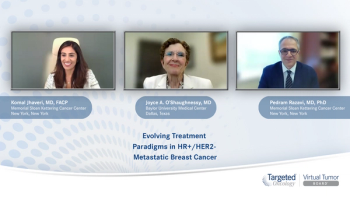
Following her review of TROPiCS-02, Joyce O’Shaughnessy, MD, shares data from the DESTINY-Breast04 study of T-DXd in HER2-low metastatic breast cancer.

Prerna Mewawalla, MD, discusses how the treatment landscape for multiple myeloma is growing.
Manmeet Ahluwalia, MD, discusses brain metastases in patient with biomarker-driven lung cancer and outcomes of these patients.
A key opinion leader in the field of renal cell carcinoma offers clinical insight on treatment sequencing strategies.
A comprehensive review of second-line treatment options for patients with clear cell renal cell carcinoma.
A phase 3 study of ciltacabtagene autoleucel in patients with lenalidomide-refractory multiple myeloma is discussed by Binod Dhakal, MD, MS.
Jonathan C. Trent, MD, PhD, discusses the methods, design, and results from the INTRIGUE study in advanced gastrointestinal stromal tumor.

Prerna Mewawalla, MD, discusses how she approaches the choice of therapy for relapsed/refractory multiple myeloma now that many different options are available for patients.
Dr Jamie L. Koprivnikar describes her general approaches to diagnosing and risk stratifying patients with myelodysplastic syndrome, and how she differentiates high-risk and low-risk disease.
Jamie L. Koprivnikar, MD, presents the case of a 72-year-old woman diagnosed with single lineage dysplasia myelodysplastic syndrome and shares her initial impressions.
Eytan M. Stein, MD, discusses trials evaluating Menin inhibitors for patients with acute leukemia and unmet needs that persist in the space.

Johannes Schetelig, MD, MSc, discusses the sequencing of allogeneic stem cell transplant to achieve the best response in patients with acute myeloid leukemia/

Chronic GVHD specialists share commentary on long-term effects of graft versus host disease and therapies for the condition.

The panel debates the various treatment options and comments on when they prefer each one.
Se-Hoon Lee, MD, an oncologist at the Samsung Medical Center in Seoul, Korea, discusses his focus of research in the lung cancer space, including the phase 1 CHRYSALIS study of amivantamab and lazertinib in patients with EGFR-mutated non–small cell lung cancer.
Marcia S. Brose, MD, PhD, FASCO, discusses trials LIBRETTO program leading up to LIBRETTO-531.