THYROID CANCERS
Latest News

March 7th 2014
By Staff Writer
A wide-ranging analysis of more than 5500 breast cancer tumors that combined genomic and protein expression testing has identified promising targets to explore for treating patients with poor prognoses, with particularly notable findings involving androgen receptor (AR) expression.
Latest Videos



CME Content





























More News
Julie R. Brahmer, MD, from Johns Hopkins University School of Medicine, Sidney Kimmel Comprehensive Cancer Center, discusses the outlook for immunotherapies in cancer care.
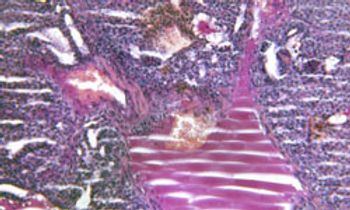
Across several studies, the BRAFV600E mutation has been reported to be associated with several negative prognostic clinicopathologic features as well as an increase in overall mortality in patients with papillary thyroid carcinoma (PTC).

Over the past two decades, there has been a shift away from indiscriminate cell-killing by anticancer agents toward the development of more specific drugs that target key aspects of cancer cell biology.
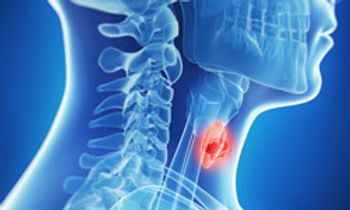
Sorafenib (Nexavar) has been granted a priority review designation by the FDA for locally advanced or metastatic radioactive iodine (RAI)-refractory differentiated thyroid cancer.

Paul A. Bunn, Jr, MD, from the University of Colorado, discusses afatinib for patients with activating epidermal growth factor receptor mutation.
Carol Aghajanian, MD, from the Memorial Sloan-Kettering Cancer Center, discusses the difficulties with a gold standard clinical trial endpoint in ovarian cancer.
Renier J. Brentjens, MD, PhD, from Memorial Sloan-Kettering Cancer Center, discusses the potential efficacy of CAR-modified T cells for the treatment of solid tumors.

At the 18th Annual Conference of the National Comprehensive Cancer Network (NCCN), experts presented the latest updates to the NCCN Clinical Practice Guidelines in Oncology.

Cameron J. Turtle, MD, PhD, from the Fred Hutchinson Cancer Research Center, discusses the design of a chimeric antigen receptor (CAR).
Antoni Ribas, MD, PhD, the director of the Tumor Immunology Program Area at UCLA's Jonsson Comprehensive Cancer Center, discusses PD-1 and PD-L1 in various cancers.

Richard Finn, MD, from the Jonsson Comprehensive Cancer Center, UCLA, describes the development of cyclin-dependent kinases (CDKs) for the treatment of cancer.

Researchers at the NCI have developed the most comprehensive analysis of coding variants in the most frequently studied human tumor cell lines in cancer research.
Marcia Brose, MD, PhD, from the University of Pennsylvania, on repurposing drugs to treat thyroid cancer.
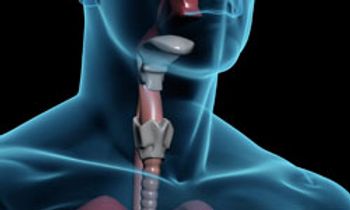
Interim findings from a phase III study indicate that sorafenib nearly doubled PFS for patients with differentiated thyroid cancer resistant to standard radioactive iodine therapy.
Marcia Brose, MD, PhD, discusses the rationale, background, and results from the phase III DECISION study that explored sorafenib in radioactive iodine-resistant differentiated thyroid cancer.