


Small Cell Lung Cancer
Latest News
Latest Videos

CME Content





























More News

Lurbinectedin plus atezolizumab maintenance significantly improved PFS & OS in extensive-stage SCLC, offering a potential new standard of care.
Ariel Lopez-Chavez, MD, discusses the role of comprehensive genomic profiling in small cell lung cancer management.

The FDA cleared the investigational new drug application of IDE849, a potential first-in-class DLL3-targeted antibody-drug conjugate for solid tumors.
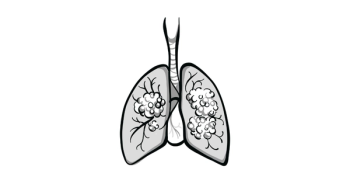
Tarlatamab outperformed chemotherapy when used for the treatment of patients with small cell lung cancer in the phase 3 DeLLphi-304 trial.

David Spigel, MD, discusses the significant benefits of durvalumab as consolidation therapy following standard chemoradiotherapy for patients with limited-stage small cell lung cancer.
ST-001, an intravenous nanoformulation of fenretinide, will be evaluated in a phase 1a/1b small cell lung cancer trial.
BNT327 combined with chemotherapy showed an overall response rate of 85.4% when used as a first-line treatment for extensive-stage small cell lung cancer.

Early trial results show combining the oncolytic virus olvi-vec with chemotherapy led to disease control and tolerable safety in extensive-stage small cell lung cancer.
Tarlatamab showed a positive benefit-risk profile in small cell lung cancer, per the phase 2 DeLLphi-301 study.

The FDA cleared the investigational new drug application for MRANK-106, a dual WEE1/YES1 kinase inhibitor, targeting advanced solid tumors.

Joe Leach, MD, discusses some of the latest developments in incorporating immunotherapy into small cell lung cancer treatment regimens.
Future Directions in the Treatment of EGFR-mutated NSCLC: Academic Perspectives and Clinical Pearls.
The panelist discusses how, expanding clinical trials, biomarker testing, and financial support improves access to emerging EGFR therapies. Novel bispecific antibodies and ADCs may shift treatment. Key insights include resistance monitoring and proactive AE management.
Dosing has started in a clinical evaluating peluntamig, which targets DLL3 and CD47, combined with chemotherapy in patients with DLL3-expressing cancers.
225Ac-SSO110 has now received FDA orphan drug designation and investigational new drug application clearance for the treatment of SCLC.
Ticiana Leal, MD, discussed the case of a 73-Year-Old woman with progressive extensive-stage small cell lung cancer.

The FDA has approved the investigational new drug application of 225Ac-SSO110, allowing for the start of a phase 1/2 trial in patients with extensive-stage small cell lung cancer and Merkel cell carcinoma.
The investigational new drug application for the nanoparticle drug SNB-101 has been cleared for small cell lung cancer treatment.
The FDA cleared the investigational new drug application for REC-4539, allowing for the start of a phase 1/2 trial in small cell lung cancer and other solid tumor indications.
The FDA granted breakthrough therapy designation to sacituzumab govitecan for patients with ES-SCLC progressing on platinum chemotherapy, supported by promising antitumor activity in the phase 2 TROPiCS-03 study.
Data from the phase 1 Acclaim-3 trial of quaratusugene ozeplasmid plus atezolizumab in extensive-stage small cell lung cancer showed no dose-limiting toxicities, with the recommended dose set at 0.12 mg/kg for phase 2.
The approval of durvalumab, based on data from the phase 3 ADRIATIC study, offers a new standard of care for patients with limited-stage small cell lung cancer.
In an interview with Targeted Oncology, Ariel Lopez-Chavez, MD, discussed recent developments in the small cell lung cancer space.
Ariel Lopez-Chavez, MD, provides an overview of the most promising advancements in targeted therapies for the treatment of small cell lung cancer.
Robert L. Ferris, MD, PhD, highlights groundbreaking advancements presented at the recent World Congress on Lung Cancer held in San Diego, California.

Antonious Hazim, MD, shares insights on his journey into oncology, his experiences at the Mayo Clinic, and his ongoing research.