
Prostate Cancer
Latest News
Latest Videos








CME Content





























More News

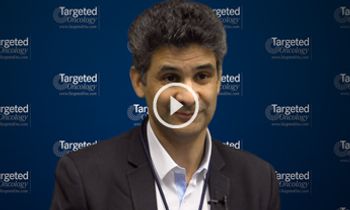
Karim Fizazi, MD, PhD,head of the Department of Cancer Medicine, Institut Gustave Roussy, University of Paris-Sud, gives highlights on the updated findings from the phase III ARAMIS trial using darolutamide for the treatment of patients with nonmetastatic castration-resistant prostate cancer, recently presented during the 2019 ASCO Annual Meeting. <br />








A study aimed at exploring genomic diversity and defining its associations with clinical outcomes in metastatic castration-resistant prostate cancer found that alterations in RB1 were a potent predictor of poor survival and that other common aberrations may serve as prognostic indicators of treatment response, according to recent work published in the Proceedings of the National Academy of Sciences.
In a posthoc analysis of the phase III SPARTAN trial, lead investigator Julie N. Graff, MD, and colleagues examined the study’s apalutamide (Erleada) arm to determine whether the agent affected metastasis-free survival (MFS), time to metastasis (TTM), and location of metastasis as a function of prostate-specific antigen (PSA) nadir.

The American Cancer Society, Dana-Farber Cancer Institute, Baptist Cancer Center, and the Mayo Clinic report that treatment patterns varied markedly by cancer type and care facility setting for patients with de novo metastatic disease who died within 1 month after diagnosis, based on an analysis of data from 100,848 patients collected from the National Cancer Database, a hospital-based cancer registry that captures 70% of patients in the United States with a new diagnosis.
The FDA recently released 5 new draft guidance documents that promote broader patient eligibility for cancer clinical trials. The policies encourage inclusion of certain individuals who were previously disqualified due to medical conditions or biological factors, including brain metastases, organ dysfunction, prior or concurrent malignancies, chronic infections, and age.
A cohort of cancer centers was selected to serve as models for identifying key strategies for racial and ethnic minority group engagement in clinical trials. On the basis of several qualifying criteria, such as sustained accrual of minorities into clinical cancer research, an established minority population ≥10% in the overall catchment, an established clinical trial infrastructure, and a formal community outreach program, the investigators identified 8 cancer centers for participation.
In a case-based-style discussion, Tanios S. Bekaii-Saab, MD, and Wells Messersmith, MD, reviewed the treatment of patients with colorectal cancer whose tumors express rare gene mutations or molecular signatures, such as <em>NTRK</em> fusions.

Survival was increased with the treatment of enzalutamide plus standard of care compared with the use of other non-steroidal anti-androgens plus SOC for patients with metastatic hormone-sensitive prostate cancer. Results from an interim analysis of the phase III ENZAMET trial presented at the 2019 ASCO Annual Meeting showed that 80% of men with mHSPC were alive after 3 years with enzalutamide treatment compared with 72%.

Karim Fizazi, MD, PhD, professor and head of the GARD Inpatient Unit, at Institut Gustave Roussy, discusses the impact of darolutamide (ODM-201) on pain and quality of life in patients with nonmetastatic castration-resistant prostate cancer.