



Prostate Cancer
Latest News
Video Series

Latest Videos




CME Content





























More News
During a live event, Tian Zhang, MD, MHS, discussed options and recent trial data for treating metastatic hormone-sensitive prostate cancer.
New research reveals that combining talazoparib with enzalutamide significantly enhances survival rates in metastatic prostate cancer patients, regardless of genetic factors.
In our first episode of Treating Together, Benjamin Garmezy, MD, and Ralph J. Miller Jr, MD, discuss multidisciplinary prostate cancer care.
During a live event, Jahan Aghalar, MD, discussed the efficacy and safety of darolutamide plus ADT in mHSPC in the ARANOTE trial.

Alicia Morgans, MD, MPH, discusses how the ARANOTE trial not only demonstrated clinical efficacy for the combination of ADT and darolutamide, but also highlighted key quality-of-life benefits that could help inform patient and physician conversations.
During a live event, Jahan Aghalar, MD, discussed key NCCN-recommended oral therapies and landmark trials for metastatic prostate cancer.
Enzalutamide and leuprolide significantly enhance survival in high-risk nonmetastatic prostate cancer, offering new hope for early intervention.

An expert discusses how the PEACE III trial demonstrated that combining radium-223 with enzalutamide significantly improved radiographic progression-free survival and overall survival compared with enzalutamide alone in patients with metastatic castration-resistant prostate cancer (mCRPC) who had bone metastases and limited prior treatment exposure.

Pedro C. Barata, MD, MSc, discusses a typical process for an oncologist to patients who are newly diagnosed with metastatic hormone-sensitive prostate cancer.
In an interview, Rana McKay, MD, discusses findings from the COMRADE trial evaluating olaparib plus radium-223 in prostate cancer presented at the 2025 ASCO Annual Meeting.

Adding CAN-2409 to standard radiation therapy significantly improved disease-free survival and pathological complete response rates in intermediate-to-high-risk prostate cancer.
Alicia Morgans, MD, MPH, discusses the phase 3 ARASTEP trial evaluating darolutamide in patients at high risk of biochemical recurrence of prostate cancer.
The ongoing ARASTEP trial evaluates darolutamide plus ADT vs placebo for high-risk prostate cancer biochemical recurrence with PSMA PET-CT-positive lesions, aiming to improve rPFS.
Olaparib and radium-223 bested radium-223 alone in radiographic progression-free survival in men with castration-resistant prostate cancer.

Darolutamide is now an FDA-approved treatment option alone or in combination with docetaxel for metastatic castration-sensitive prostate cancer.
Darolutamide significantly delayed pain progression and improved overall well-being in patients with metastatic hormone-sensitive prostate cancer.
Niraparib with AAP cut the risk of progression or death by 37% in HRR-altered mCSPC, according to data from the AMPLITUDE trial.
Radium-223 in mCRPC showed long-term favorable safety, low second primary malignancies/fracture rates, and consistent overall survival.

The pivotal AMPLIFY trial aims to support FDA approval of ⁶⁴Cu-SAR-bisPSMA as a best-in-class imaging tool in prostate cancer.
PT-112 monotherapy advances to phase 3 trial in metastatic castration-resistant prostate cancer after positive FDA end of phase 2 meeting.
Pedro C. Barata, MD, MSc, discusses options for metastatic hormone-sensitive prostate cancer in the community setting.

Madhur Nayan, MD, PhD, discusses a new machine learning model developed to enhance prostate cancer screening.

Ruben Olivares, MD, discusses the first remote transcontental HIFU therapy for prostate cancer.
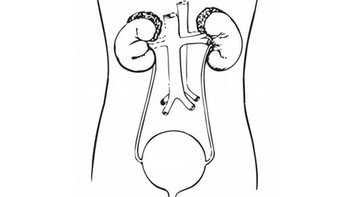
Talazoparib plus enzalutamide significantly delayed the deterioration of global health status and quality of life in patients with mCRPC in the TALAPRO-2 study.
Ruben Olivares, MD, discusses the important implications of the first transcontinental robot-assisted focal therapy procedure for prostate cancer.