


EGFR+ Lung Cancer
Latest News
Latest Videos





CME Content





























More News

Immunohistochemistry can effectively be used for the identification of ROS1 gene alterations to ascertain eligibility for the targeted therapy crizotinib for patients with non-small cell lung cancer.
Clovis has stopped clinical development of rociletinib, its once promising EGFR inhibitor for the treatment of patients with EGFR T790M-mutated non-small cell lung cancer (NSCLC).

James L. Mulshine, MD, professor, acting dean, Graduate College, Department of Internal Medicine, Rush Medical College, Rush University, discusses the worldwide differences in screening for lung cancer.

The Committee for Medicinal Products for Human Use has recommended the first-line approval of bevacizumab (Avastin) in combination with erlotinib (Tarceva) for patients with advanced or metastatic EGFR-mutant non-small cell lung cancer.
Mature data from both the phase I and phase II portions of the AURA study paints a bright, hopeful future for the use of third-generation TKI osimertinib (AZD9291) in patients with EGFR T790M-mutant non-small cell lung cancer.

mNSCLC with Mark Kris, MD and Mark Socinski, MD







Treatment with the novel multikinase inhibitor entrectinib achieved objective responses in 79% of patients with solid tumors associated with NTRK, ROS-1, or ALK rearrangements.
The FDA has approved afatinib for the treatment of patients with advanced squamous cell non-small cell lung cancer following progression on platinum-based chemotherapy.
Patients with non-small cell lung cancer (NSCLC) who had ceased to respond to EGFR TKI therapy demonstrated a rapid and robust response to the investigational agent BI-1482694 (HM61713).

The FDA's Oncologic Drugs Advisory Committee (ODAC) voted 12-1 against the accelerated approval of rociletinib for patients with metastatic EGFR T790M-mutated non-small cell lung cancer (NSCLC) who have previously received an EGFR-targeted therapy.

Christina Baik, MD, MPH, discusses alectinib compared to crizotinib in the first-line setting for patients with ALK-positive lung cancer.
Promising early phase clinical trials have led to the initiation of the phase III JUNIPER trial, which is assessing abemaciclib (LY2835219) for patients with previously treated KRAS-mutant lung cancer, a traditionally hard to treat genetic subtype.
Treatment with gefitinib (Iressa) failed to show noninferiority compared with erlotinib (Tarceva) for patients with pretreated non-small cell lung cancer (NSCLC).
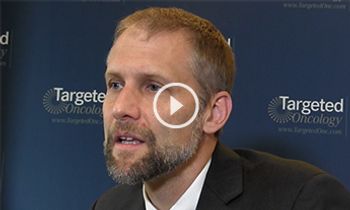
Thomas Stinchcombe, MD, discusses the complicated nature of squamous cell lung cancer. Stinchcombe says that there has been a recent boom in targeted therapies for non-squamous cell lung cancer, though not as much research in squamous cell lung cancer due to its multitude of mutations.
In an interview with Targeted Oncology, Sarah Goldberg, MD, MPH, assistant professor of Medicine and Medical Oncology, Yale Cancer Center, discussed the efficacy of immunotherapies, PD-L1 as a biomarker, and how these therapies will continue to alter the treatment of patients with lung cancer.
In an interview with Targeted Oncology, Edward Kim, MD, discussed the FDA-approved immunotherapies nivolumab and pembrolizumab along with potential combinations, biomarkers, and ongoing research.