
BREAST CANCER
Latest News


Abemaciclib Added to Aromatase Inhibitors Allows for PFS Boost in HR+/HER2- Breast Cancer
By Silas Inman
Priming Immune System Before Nivolumab Improves Response in Metastatic TNBC
By Wayne Kuznar
Latest Videos




CME Content





























More News

Tumor shrinkage was induced in women with ER-positive metastatic breast cancer who had progressed on standard anti-estrogen therapies with treatment with Z-endoxifen, a potent derivative of the drug tamoxifen.

A look back at all the FDA news that occurred in the month of August.
The decision deadline on a biologics license application (BLA) for MYL-1401O, a trastuzumab (Herceptin) biosimilar co-developed by Mylan and Biocon, has been extended by 3 months, the FDA has announced. Under the new timeframe, a final decision is expected on or before December 3, 2017.
The FDA has granted breakthrough therapy designation to the investigational HER2-targeting antibody-drug conjugate DS-8201 for the treatment of patients with HER2-positive, locally advanced, or metastatic breast cancer who have been treated with trastuzumab (Herceptin) and pertuzumab (Perjeta) and have disease progression after ado-trastuzumab emtansine (T-DM1; Kadcyla).
Breast cancer expert Carlos Arteaga, MD, was recently named director of the Harold C. Simmons Comprehensive Cancer Center at UT Southwestern Medical Center.
Fulvestrant (Faslodex) has been approved by the FDA for use in hormone receptor-positive, HER2-negative locally-advanced or metastatic breast cancer in postmenopausal women not previously treated with endocrine therapy.
The CDK 4/6 inhibitor ribociclib (Kisqali) has been approved by the European Commission for use in combination with an aromatase inhibitor for the frontline treatment of postmenopausal women with hormone-receptor (HR)–positive, HER2-negative locally advanced or metastatic breast cancer.
Frankie Ann Holmes, MD, discusses which breast cancer patients can benefit from endocrine therapy and the challenges that still exist with deciding between chemotherapy and endocrine therapy for each patient.
According to findings recently published online in the<em> Journal of Clinical Oncology, </em>12<em> </em>weeks of neoadjuvant T-DM1 (ado-trastuzumab emtansine; Kadcyla) with or without endocrine therapy induced superior pathologic complete response (pCR) compared with trastuzumab (Herceptin) plus endocrine therapy in patients with HER2-positive/HR-positive early breast cancer.
Adding pertuzumab to standard postoperative trastuzumab therapy in patients with HER2-positive early breast cancer improved the rate of recurrence overall, but had a greater benefit for individuals with higher-risk disease, according to results from the phase III APHINITY trial.
Sacituzumab govitecan (IMMU-132) was well tolerated and demonstrated early and durable responses in heavily pretreated patients with metastatic triple-negative breast cancer (mTNBC), according to the results of a recent phase I/II study published in the <em>Journal of Clinical Oncology</em>.<br />
Lisa Carey, MD, discusses strategies that can be used to de-escalate treatment in patients with triple-negative breast cancer and the steps toward developing further strategies in this area.
A look back at all the FDA news that occurred in July.
During the 2017 ESMO Congress, to be held September 8-12 in Madrid, Spain, the European Society for Medical Oncology (ESMO) will award 4 oncologists with its distinguished annual awards:
The use of fulvestrant (Faslodex) to treat estrogen receptor (ER)-positive, locally-advanced or metastatic breast cancer in postmenopausal women not previously treated with endocrine therapy has been approved by the European Commission (EC).
The challenge of precision medicine in metastatic breast cancer is to develop well-tolerated therapies based on key actionable, accessible, and validated biomarkers, said Francisco J. Esteva, MD, PhD, during an explanation of the current understanding of the molecular landscape of metastatic breast cancer at the <em>16th Annual </em>International Congress on the Future of Breast Cancer East.
In the neoadjuvant and adjuvant settings of treating patients with HER2-positive breast cancer, trastuzumab (Herceptin) remains a standard of care. The question has become whether combination regimens with additional HER2-directed therapies or alternative therapies could improve responses in this patient population without added toxicities, according to Sara M. Tolaney, MD, MPH.

Checkpoint inhibitors against PD-1 and PD-L1 have demonstrated promising efficacy as monotherapies and in combination with chemotherapy for patients with triple-negative breast cancer, with phase III data on the horizon
Mark Pegram, MD, shares some of the most recent developments in the HER2-positive metastatic breast cancer space, the research currently ongoing, and why it is such an exciting time for the field.
Joyce O’Shaughnessy, MD, provides an update on existing research in metastatic triple-negative breast cancer, and novel agents on the horizon.
In an interview with <em>Targeted Oncology, </em>Arti Hurria, MD, shares the treatment considerations she makes when treating older patients with breast cancer, the unique challenges that come with treating this patient population, and the exciting future she envisions for this space.
MYL-1401O, the trastuzumab (Herceptin) biosimilar manufactured by Mylan Pharmaceuticals, has been recommended for approval by the FDA's Oncologic Drugs Advisory Committee (ODAC) in a 16-0 vote.
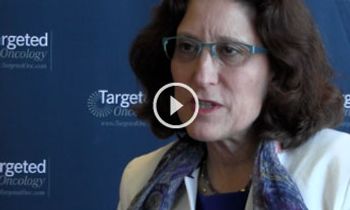
Hope S. Rugo, MD, professor of medicine and director of the Breast Oncology Clinical Trials Program at the UCSF Helen Diller Family Comprehensive Cancer Center, discusses extended adjuvant endocrine therapy for patients with HR+ breast cancer.
Adam M. Brufsky, MD, PhD, professor of Medicine, associate chief of Hematology/Oncology, co-director of the Comprehensive Breast Care Center, associate director of Clinical Investigation, University of Pittsburgh, discusses the utility of molecular signatures in managing early-stage breast cancer.
Neratinib (Nerlynx) has been approved by the FDA for the extended adjuvant treatment of patients with early stage HER2-positive breast cancer following postoperative treatment with trastuzumab (Herceptin).