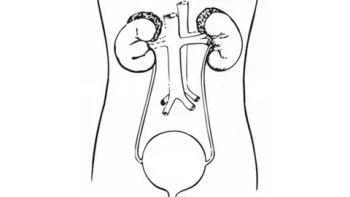
Overall survival was prolonged with the addition of darolutamide to androgen-deprivation therapy and docetaxel in patient with metastatic, hormone-sensitive prostate cancer.
Overall survival was prolonged with the addition of darolutamide to androgen-deprivation therapy and docetaxel in patient with metastatic, hormone-sensitive prostate cancer.

A reduction in cabozantinib dosage because of toxicity shows improved time to treatment failure and overall survival in patients with metastatic renal cell carcinoma.

Results from a retrospective study favor younger matched unrelated donors for consideration in the donor selection for patients with myelodysplastic syndrome.
SWOG 1318 results are promising for extended blinatumomab use in patients with acute lymphoblastic leukemia.
Fluorodeoxyglucose PET/CT and sodium fluoride PET/CT and percent change in lesion number may be associated with overall survival in patients with metastatic genitourinary malignancies.

Findings around trametinib as treatment of patients with an ovarian cancer subtype represent a major advance in the treatment of women with this rare ovarian and peritoneal cancer subtype, according to David Gershenson, MD.

The label for axicabtagene ciloleucel now includes prophylactic corticosteroids use in all approved indications.

Dosing of nanatinostat and valganciclovira in a phase1b/2 clinical trial has been initiated.

Patients with gastrointestinal cancers are being enrolled to a phase 1/2 of pelareorep in combination with atezolizumab.
CheckMate 9X8 trial results indicate a progression-free survival improvement with nivolumab that was not statistically significant.
Promising study results support continued research of T-DXd in patients with HER2-positive mCRC while the risk of potential ILD/pneumonitis requires monitoring.
Retrospective data show that only 24% of patients treated with immune checkpoint inhibitors required immunosuppression while the rest recovered over time.
Phase 3 study findings show that paclitaxel combined carboplatin stands up to the combination of paclitaxel and ifosfamide for the treatment of patients with uterine carcinosarcoma.

Phase 1b data indicate that pembrolizumab in combination with pepinemab is safe for the frontline treatment of advanced, recurrent, or metastatic head and neck squamous cell carcinoma.
In a phase 3 clinical trial, avasopasem appeared to lower the rate of severe oral mucositis in patients.
Updated findings from the phase 1/2 TRIDENT-1 trial evaluating repotrectinib showed efficacy in patients with neurotrophic tyrosine receptor kinase fusion-positive advanced solid tumors in expanded cohorts.
The considerations investigators must take into account when designing clinical trials include patient population, previous therapies, assessment of the central nervous system, end points, and leptomeningeal disease, according to the new guidelines.

According to findings of the ZUMA-12, axicabtagene ciloleucel can induce durable responses in patients with large B-cell lymphoma.

In patients with relapsed or refractory marginal zone lymphoma, parsaclisib produced a clinical response.

Samuraciclib plus fulvestrant demonstrates activity in patients with HR-positive breast cancer who were heavily pretreated with CDK4/6 inhibitors.
In an interview with Targeted Oncology, Richard M. Stone, MD, discussed challenging subtypes of acute myeloid leukemia and therapies available to treat them.
Results from the phase 3 ESCORT-1st trial have demonstrated promise for the combination of camrelizumab and chemotherapy in patients with advanced or metastatic esophageal squamous cell carcinoma.