Nam Quoc Bui, MD, discusses survival, symptom control, and ovarian toxicity in the DeFi trial of nirogacestat in patients with desmoid tumors.
Nam Quoc Bui, MD, discusses survival, symptom control, and ovarian toxicity in the DeFi trial of nirogacestat in patients with desmoid tumors.

Co-hosts Kristie L. Kahl and Andrew Svonavec highlight the many advantages to attending the 42nd Annual Miami Breast Cancer Conference, with some additional tidbits to round out the main event.
David Zhen, MD, discussed the relevance of nivolumab in the upper gastrointestinal cancer population.
In a live event, Ganesh V. Raj, MD, PhD, discussed the landscape of metastatic hormone-sensitive prostate cancer considering the recent data from the ARANOTE study.
During a live event, participating oncologists discuss the role of ctDNA and molecular testing in muscle-invasive bladder cancer.

In a Community Case Forum in partnership with the North Carolina Oncology Association, Cristina Gasparetto, MD, discussed the CEPHEUS, IMROZ, and BENEFIT trials of treatment for transplant-ineligible newly diagnosed multiple myeloma.
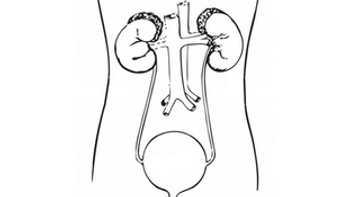
In separate, live virtual events, David H. Aggen, MD, PhD; and Matthew R. Zibelman, MD, discussed the case of a patient with urothelial carcinoma and potential treatment options.
During a Case-Based Roundtable® event, Natalie Galanina, MD, discussed data from the ZUMA-7 and TRANSFORM trials in the first article of a 2-part series.
During a live event, Alexander I. Spira, MD, PhD, and participants NGS testing practices and the rationale behind their approaches.

During a Case-Based Roundtable® event, Jay Yang, MD, discussed the trial comparing luspatercept with ESA in myelodysplastic syndrome.

During a Case-Based Roundtable® event, Evan J. Lipson, MD, moderated a discussion on the tolerability of immunotherapy in metastatic melanoma and when to stop therapy.
Binod Dhakal, MD, MS, discussed the use of bispecific antibodies and chimeric antigen receptor T-cell therapy in relapsed/refractory multiple myeloma treatment.

During a Case-Based Roundtable® event, Julie R. Brahmer, MD, MSC, reviewed the CheckMate 9LA, KEYNOTE-407, and POSEIDON trials of immunotherapy in patients with metastatic non–small cell lung cancer.
During a Case-Based Roundtable® event, Thach-Giao Truong, MD, discussed goals and barriers to treatment when using combination immunotherapy for metastatic melanoma in the second article of a 2-part series.
During a Case-Based Roundtable® event, Nitin Jain, MD, and participants discussed treating a patient with CLL after acalabrutinib and venetoclax/rituximab.

During a Case-Based Roundtable® event, Neeraj Agarwal, MD, and participants discussed how they might determine which combination therapy to use for a patient with metastatic renal cell carcinoma.
During a live event, Nam Quoc Bui, MD discussed desmoid tumors, their presentation, and treatment.
During a Case-Based Roundtable® event, Muhammad Umair Mushtaq, MD, discussed managing long-term toxicity concerns related to CAR T-cell therapy in multiple myeloma.
During a live event, Andrew Kuykendall, MD, discussed management of anemia before and during use of JAK inhibitor for myelofibrosis in the second of 2 articles.
During a live event, Kathryn E. Beckermann, MD, PhD, discussed the treatment of RCC with insights from a recent trial on sequencing targeted therapies.
During a Case-Based Roundtable® event, Nakhle Saba, MD, and participants discussed the data supporting the 2 newer BTK inhibitor therapies acalabrutinib and zanubrutinib in patients with chronic lymphocytic leukemia who received 1 prior line of therapy in the second article of a 2-part series.
During a Case-Based Roundtable event, Laura Huppert, MD, discussed data and considerations around using T-DXd in breast cancer and the need for HER2-negative data with T-DXd.
During a Case-Based Roundtable® event, Thach-Giao Truong, MD, discussed how data from the CheckMate-067 and RELATIVITY-047 affect their choice of therapy for metastatic melanoma in the first article of a 2-part series.
In a live event, Vinay Minocha, MD, discusses the addition of darolutamide to androgen deprivation therapy for in patients with metastatic hormone-sensitive prostate cancer.

During a Case-Based Roundtable® event, Andrew Kuykendall, MD, and participants discussed the the importance of early intervention and consideration of anemia with JAK inhibitor therapy for patients with myelofibrosis in the first article of a 2-part series.
During a Case-Based Roundtable® event, Kathryn E. Beckermann, MD, PhD, discussed second-line regimens with event participants depending on their own practice and trial data for a patient with clear cell renal cell carcinoma.
During a Case-Based Roundtable® event, Nakhle Saba, MD, and participants discussed treatment for a patient with chronic lymphocytic leukemia who received 1 prior line of therapy in the first article of a 2-part series.
During a Community Case Forum event in partnership with the Medical Oncology Association of Southern California, Edward S. Kim, MD, MBA, discussed the FLAURA2 and MARIPOSA trials of newer regimens for EGFR-positive lung cancer.
In separate, live virtual events, Vincent K. Lam, MD, and Chul Kim, MD, MPH, discuss molecular assays and treatment options for a patient with metastatic non–small cell lung cancer (NSCLC), with participants.
During a Case-Based Roundtable event, Laura Huppert, MD, reviewed antibody-drug conjugates for a patient with metastatic breast cancer who had progressed on multiple line of therapy.