Articles by Samantha Hitchcock

During a presentation at the National Comprehensive Cancer Network 13th Annual Conference: Hematologic Malignancies Phillippe Armand, MD, PhD, discusses how novel agents could be used in the future either to postpone, permit, or even replace allogeneic stem cell transplantation.

Results from the phase I/II CheckMate 040 study demonstrated that single-agent nivolumab showed promising clinical activity in patients with Child-Pugh B advanced hepatocellular carcinoma, a population often excluded from advanced HCC trials.
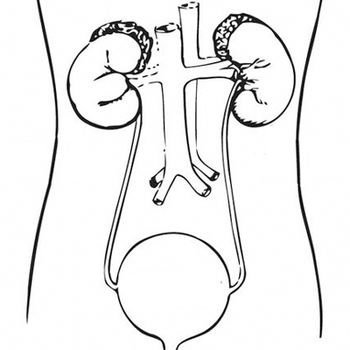
Daniel Petrylak, MD, recently spoke on the treatment considerations and decisions he makes when treating patients with bladder cancer. Petrylak explained his treatment decisions based on 2 case scenarios during a <em>Targeted Oncology </em>live case-based peer perspectives presentation.
During a presentation at the 2018 International Society of Gastrointestinal Oncology Annual Meeting, Dustin Deming, MD, discussed treatment options showing promise for patients with <em>BRAF</em> V600E–mutant metastatic colorectal cancer.
Anthony F. Shields, MD, PhD, discusses pivotal data from the IDEA pooled analysis, consisting of 6 international, noninferiority, phase III colon cancer studies.
In a presentation at the 2018 International Society of Gastrointestinal Oncology Annual Meeting, Yung-Jue Bang, MD, PhD, discusses the most promising biomarkers and treatment approaches for patients with GEJ cancer, highlighting recent and ongoing trials of immunotherapy.
Kabir Mody, MD, discusses the evolution of the hepatocellular carcinoma treatment landscape over the past year during a presentation at the 2018 International Society of Gastrointestinal Oncology.

During a presentation at the Association of Community Cancer Centers’ 35th National Oncology Conference, Marc Matrana, MD, discussed the development of the Ochsner Health System’s Precision Cancer Therapies Program to provide early phase clinical trials in the community setting across the state.<br />

Rising prescription drug prices continue to add to the burden of paying for quality healthcare. In an effort to confront such costs, the Centers for Medicare & Medicaid Services has rescinded a prohibition on step therapy for Medicare Advantage plans. But some contend such a policy will reduce patient access to optimal medication.

With 2 CAR T-cell therapies now approved and more moving quickly through early-phase clinical trials, 4 healthcare experts reflected on the evolving field of CAR T-cell therapy, their understanding of its current and future applicability for patients, the process for administration and the challenges and obstacles that remain unaddressed during an Association of Community Cancer Centers interactive panel.<br />
Axel Grothey, MD, recently shared the treatment considerations and decisions he makes when treating patients with colon cancer. Grothey, a medical oncologist at the West Cancer Center, explained how he would treat these patients based on case scenarios during a <em>Targeted Oncology</em> live case-based peer perspectives presentation.

Rachel Sanborn, MD, recently discussed the treatment options and considerations she makes when treating patients with non—small cell lung cancer. Sanborn, director of Thoracic Oncology, Providence Cancer Center, explained her treatment decisions based on 2 case scenarios during a <em>Targeted Oncology </em>live case-based peer perspectives presentation.
Sham Mailankody, MBBS, discusses current treatment options and shifting preferences, especially toward triplet combinations, for patients with relapsed/refractory multiple myeloma, as well as emerging immunotherapy treatment options.

Medicare patients could save an estimated $150 million on out-of-pocket co-payments for clinic visits if proposed changes to the hospital Outpatient Prospective Payment System and Ambulatory Surgical Cancer payment system are adopted by the Centers for Medicare & Medicaid Services for 2019.
Increased focus has been placed on the overwhelming stress within the physician community, often referred to as burnout. According to Medscape’s 2018 National Physician Burnout and Depression Report, nearly twothirds of physicians within the United States have reported symptoms.
The Association of Community Cancer Centers will honor 7 cancer centers with the 2018 ACCC Innovator Award in recognition of the inventive programs they have implemented to overcome challenges in their centers. The centers will receive the award during the ACCC 35th National Oncology Conference, to be held October 17-19 in Phoenix, Arizona.
Two oncologists from the Winship Cancer Institute of Emory University reviewed data for and against the use of chemotherapy for patients with resectable colorectal cancer liver metastases. Mehmet Akce, MD, spoke in favor of chemotherapy, while Shishir K. Maithel, MD, argued against it.
Benjamin P. Levy, MD, discusses his clinical considerations for the management of non
H. Jack West, MD, recently discussed the treatment options and considerations he makes when treating patients with stage III and IV non–small cell lung cancer. West, medical director of the Thoracic Oncology Program, Swedish Cancer Institute, explained the nuances that go into his treatment decisions when discussing 2 case scenarios during a <em>Targeted Oncology </em>live case-based peer perspective presentation.
Although the Oncology Care Model has policy goals of improving care quality and reducing costs, data operationalization has proven to be more complex and confusing than anticipated since its debut in 2015 from the Centers for Medicare & Medicaid Services. Despite these challenges, many OCM-participating practices have been successful and reap the benefit of value-based care.
During a presentation at the American Association for Cancer Research’s inaugural Advances in Malignant Lymphoma meeting, Mehta-Shah, associate professor in the Department of Medicine with Washington University School of Medicine in St. Louis, presented preliminary data showing how new pathway-dependent strategies using novel agent combinations may represent a new way to treat patients with T-cell lymphomas.
Timothy M. Kuzel, MD, recently spoke on the treatment decisions and consideration he makes when treating patients with renal cell carcinoma. Kuzel, chief of the Division of Hematology/Oncology, deputy director of Rush Cancer Center, Rush University Medical Center, explained his treatment decisions based on 2 case scenarios during a <em>Targeted Oncology </em>live case-based peer perspectives presentation.
Kartik Konduri, MD, recently spoke on the treatment considerations and decisions he makes when treating patients with non–small cell lung cancer. Konduri, medical director of the Chest Cancer Research and Treatment Center, Baylor University Medical Center, explained his treatment decisions based on 2 case scenarios during a <em>Targeted Oncology</em> live case-based peer perspectives presentation.
Joshua Bauml, MD, speaks on the treatment options and considerations he makes when treating patients with non–small cell lung cancer. Bauml explained his treatment decisions based on 2 case scenarios during a <em>Targeted Oncology </em>live case-based peer perspectives presentation.
Sham Mailankody, MBBS, discusses current treatment options and shifting preferences, especially toward triplet combinations, as well as emerging immunotherapy treatment options.
The majority of community oncology practitioners test less than half of patients with early or metastatic breast cancer for germline BRCA1/2 mutations, according to the results of a recent survey by the Association of Community Cancer Centers. Further findings from the survey suggest that this could be due to issues with identifying patients would should be offered BRCA testing, patient concerns, and a lack of access to testing and genetic counseling.
Richard Kim, MD, recently shared his treatment considerations and decisions he makes when treating patients with hepatocellular carcinoma and colorectal cancer. Kim explained his treatment decisions based on 2 gastrointestinal case scenarios during a <em>Targeted Oncology</em> live case-based peer perspectives program.
While the approval of new agents represents a great step forward in the treatment of chronic lymphocytic leukemia (CLL), physicians are now challenged with how to best utilize these new treatment options, according to a presentation by Anthony Mato, MD, MSCE, at the 2nd Annual Live Medical Crossfire: Hematologic Malignancies.
Shannon Westin, MD, MPH, recently explained the treatment considerations and decisions she makes when treating patients with ovarian cancer. Westin explained her treatment decisions based on 2 case scenarios during a <em>Targeted Oncology</em> live case-based peer perspectives presentation.
Rami S. Komrokji, MD, recently discussed the treatment considerations and decisions he makes when treating patients with acute myeloid leukemia. Komrokji, professor of oncologic sciences, University of South Florida, and vice chair of the Department of Hematologic Malignancies, Moffitt Cancer Center, explained his treatment decisions based on 2 case scenarios during a <em>Targeted Oncology</em> live case-based peer perspectives presentation.