A full approval has been granted to pembrolizumab by the FDA for the treatment of adult and pediatric patients with unresectable or metastatic microsatellite instability-high or mismatch repair deficient solid tumors.
Jordyn Sava is an editor for Targeted Oncology.
A full approval has been granted to pembrolizumab by the FDA for the treatment of adult and pediatric patients with unresectable or metastatic microsatellite instability-high or mismatch repair deficient solid tumors.

In an interview, Krisda Chaiyachati, MD, MPH, discussed some of the social determinants of health for patients with cancer and some of the challenges patients undergoing treatment face, including transportation insecurity.

At the Society of Gynecologic Oncology 2023 Annual Meeting, data showed that with a median follow-up of 25.8 months, the proportion of patients on Arm A of the NRG-GY017 trial of patients with cervical cancer with 2-year disease-free survival rate was 79% vs 59% in Arm B.
As of March 28, 2023, the partial clinical hold on the phase 1/2 VELA trial, which is evaluating the selective CDK2 inhibitor BLU-222 for patients with solid tumors, has been lifted. Blueprint Medicines has resumed the re-initiation of patient enrollment.

PT886, a novel bispecific antibody which targets claudin 18.2 and CD47, is currently being evaluated in a phase 1 study for patients with gastric, gastroesophageal junction and pancreatic adenocarcinomas.

With little improvement in survival seen for patients with small cell lung cancer, investigators are now assessing novel agents that are shifting the treatment paradigm of extensive disease-small cell lung cancer.
In an interview with Targeted Oncology, Jennifer Y. Wo, MD, highlighted emerging discussions in the metastatic colorectal cancer space, where targeted therapies play a role, and what the next steps for research include.
In an interview, Edwin Choy, MD, discussed the treatment landscape of GIST and recent changes to NCCN guidelines.

The phase 2 KGOG3046 is the first study to show survival outcomes with the dual checkpoint blockades, durvalumab and tremelimumab, combined with neoadjuvant chemotherapy for the treatment of patients with newly diagnosed advanced ovarian cancer.

In an interview with Targeted Oncology, Aaron T. Gerds, MD, MS, provided an in-depth discussion on the complete response letter issued to ruxolitinib extended-release, and why continued evaluation of the agent could be beneficial for patients with MPNs.

In an interview with Targeted Oncology, Paul Richardson, MD, highlighted his presentation from the 4th Annual Miami Cancer Institute Global Summit on Immunotherapies for Hematologic Malignancies on updates and personalization of treatments for patients with multiple myeloma.
The FDA noted that additional requirements are needed prior to the approval of ruxolitinib extended-release for patients with myelofibrosis, polycythemia vera, and graft-versus-host disease, in a complete response letter.

In an interview with Targeted Oncology, Robert J. Soiffer, MD, discussed relapse after transplant for patients with cancer and what is important to note moving forward with research.

Clinical trials exploring regimens without ASCT consolidation in young patients with MCL are needed, and maintenance with rituximab should be considered for patients after first-line treatment with bendamustine plus rituximab and R-CHOP
Tirabrutinib has received orphan drug status from the FDA and is being studied in the phase 2 PROSPECT study for patients with primary central nervous system lymphoma.
The first orphan drug designation from the FDA has been received by FORE Biotherapeutics and for the FORE8394 program for patients with primary brain and central nervous system malignancies.

In an interview with Targeted Oncology, Guenther Koehne, MD, PhD, provided an overview of The Summit of Americas on Immunotherapies for Hematologic Malignancies and some of the recent and exciting advances being seen in the hematology space.
ISB 1442, a 2+1 biparatopic bispecific antibody that has CD38 and CD47 targeting domains, has received an orphan drug designation from the FDA and is being assessed in a phase 1/2 clinical trial for patients with multiple myeloma.
Ripretinib will be evaluated in a phase 3 trial for patients with gastrointestinal stromal tumor after being added to the NCCN guidelines and receiving 2 breakthrough therapy designations from the FDA.
At a prespecified analysis of the CARTITUDE-1 trial with a median follow-up of approximately 28 months, treatment with cilta-cel continued to elicit positive responses and maintained a favorable risk/benefit profile for patients with multiple myeloma.
PBP1510 has received a fast track designation from the FDA for patients with unresectable or metastatic pancreatic adenocarcinoma that has relapsed following and/or is refractory to at least 1 prior line therapy.

Two studies of patritumab deruxtecan in patients with EGFR-mutated metastatic non–small cell lung cancer and HER3-expressing metastatic breast cancer revealed promising overall response, disease control, progression-free survival rates, and more.
In an interview with Targeted Oncology, Hitomi Hosoya, MD, discussed the potential use of ctDNA in the myeloma space, including its ability to sequence BCMA-targeted therapies and reduce the need for bone marrow exams.
The phase 3 KeyVibe-002 trial of pembrolizumab and vibostolimab did not meet its primary end point of progression-free survival and was numerically less effective than docetaxel in patients with non–small cell lung cancer
The combination of CDK9 plus BTK inhibition has already demonstrated synergistic clinical efficacy vs BTK inhibition alone. Now, a clinical trial collaboration will evaluate PRT2527 and zanubrutinib for patients with hematologic malignancies.
A case report published in The Journal of the National Comprehensive Cancer Center highlights the importance of being mindful of unusual adverse events associated with BRAF/MEK inhibition for patients with BRAF-mutated non–small cell lung cancer.
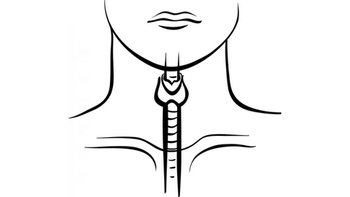
In an interview with Targeted Oncology, Yuri E. Nikiforov, MD, PhD, discussed what led to the reclassification of NIFTP and the incidence of thyroid cancer in patients.
Findings from the phase 2 Study CDRB436G2201 trial have led the FDA to approve dabrafenib combined with trametinib for pediatric patients with BRAF V600E-mutated low-grade glioma who require systemic therapy.
In an interview with Targeted Oncology, Aime T. Franco, PhD, discussed the molecular landscape of pediatric patients with thyroid cancer and the presentation she gave at the 91st Annual Meeting of the American Thyroid Association.
The newly approved supplemental new drug application for Illuccix by the FDA will enable patients with prostate cancer to be identified and selected for radioligand therapy.