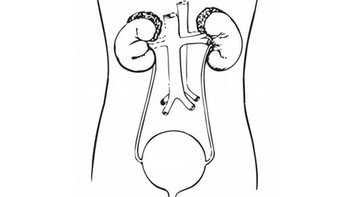
In this feature article, key opinion leaders look at the burgeoning use of ctDNA to dictate treatment approaches for patients with bladder cancer.
Conor Killmurray is an editor for Targeted Oncology and Peers and Perspectives in Oncology.
In this feature article, key opinion leaders look at the burgeoning use of ctDNA to dictate treatment approaches for patients with bladder cancer.

This case-based feature focused on oncologists at 2 virtual events who examined the development of new EGFR-targeted therapies including combinations of amivantamab with lazertinib and with chemotherapy.

In a Peers & Perspectives in Oncology feature article, we focus on the importance of the transition-of-care process for patients with cancer as they move from the inpatient to outpatient setting, as well as between lines of therapy with comments from Marc J. Braunstein, MD, PhD, and Michael Shusterman, MD.

Patient reported health-related quality of life outcomes from the phase 3 MIRASOL trial strengthen the case for mirvetuximab soravtansine as a new standard of care for patients with folate receptor-alpha positive ovarian cancer resistant to platinum chemotherapy.
Findings from an analysis of the REACH2 study, presented at the 2024 Transplantation & Cellular Therapy Meetings, showed that concomitant treatment with azoles does not impact the safety and efficacy of ruxolitinib for patients with acute graft-vs-host-disease.

Bispecific antibodies are a powerful class of therapy that offer an alternative or complement to CAR T-cell therapies, but there are similar challenges to implementing them in clinical practice. In live events, experts discussed their experience setting up standard operating procedures in their cancer centers.
Blastic plasmacytoid dendritic cell neoplasm is a rare disease with limited treatment options, making the use of targeted therapies crucial in this patient population.

Wayne Jonas, MD, of the Healing Works Foundation, spoke with Targeted Oncology about how oncologists can bridge the communication gap between them and patients and promote integrative care.

Clinical trials are shedding light into best treatment approaches for non–clear cell renal cell carcinoma, including immunotherapy plus tyrosine kinase inhibitor combinations, as discussed in Case-Based Roundtable events.
Results from an ongoing phase 2 study show the viability for the use of zanubrutinib after patients with previously treated B-cell malignancies are deemed intolerant to the next-generation Bruton tyrosine kinase inhibitor acalabrutinib.
Patients with hormone receptor-positive, HER2-negative, node-positive, high-risk early breast cancer given abemaciclib for 2 years in addition to endocrine therapy demonstrated an association between ctDNA positivity and disease recurrence.

Results from an international phase 2 study show that using metronomic capecitabine in combination with the tyrosine kinase inhibitor pyrotinib continued to have promising efficacy results for patients with HER2-positive metastatic breast cancer.

In an interview with Peers & Perspectives in Oncology, Rana McKay, MD, explains how an AI model can affect the disparities faced by racial minority groups and the wider adoption of AI in the prostate cancer space.
In 2 separate, live virtual Case-Based Roundtable events, physicians from across the country discussed the treatment path from frontline therapy to second-line sacituzumab govitecan for patients with metastatic TNBC.

In an interview for World Neuroendocrine Cancer Awareness Day, Casey J. Allen, MD, discussed the advances in treatment for these patients with gastrointestinal neuroendocrine tumors.
One-year follow-up of the phase 2 study assessing the use of neoadjuvant and adjuvant cemiplimab in patients with cutaneous squamous cell carcinoma shows a promising survival benefit that has led to a wider phase 3 study.
Wendi Waugh, BS, RT(R)(T), CMD, CTR, discussed what community practices can expect regarding a patient’s financial toxicity and the creative solutions available to ease that financial burden.

The addition of PARP inhibitors for the treatment of patients with BRCA-mutated advanced ovarian cancer has provided clinicians with a stronger set of treatment options. Looking at how the BRCA mutation responds to these inhibitors is then vital to deciding the patient’s treatment path.

Findings presented at IMS 2023 suggest multi-specific strategies will be needed to avoid the antigen loss created by sequential mono-immunotherapies.
In an interview, Brad S. Kahl, MD, discussed the changes in the field of follicular lymphoma and how physicians should approach treatment.
In an interview with Targeted Oncology™, William Dale, MD, PhD, vice chair of academic affairs in the Department of Supportive Care Medicine and director of the Center for Cancer and Aging at City of Hope, discussed the setup of a new practical geriatric assessment for oncologists to implement into their practice as part of updated guidelines from the American Society of Clinical Oncology.

In an interview with Targeted Oncology, Se-Hoon Lee, MD, highlights the results of the long-term analysis of the CHRYSALIS trial looking at amivantamab and lazertinib for patients with EGFR mutated non–small cell lung cancer.

In an 8-year follow up analysis of patients on the ExteNET trial, researchers saw that overall survival was not significantly different to rates on placebo.
Aaron T. Gerds, MD, MS, discusses the 48-week results of the MOMENTUM trial and where momelotinib goes from here in the treatment of patients with myelofibrosis.

The FDA has approved avasopasem for patients with head and neck cancer to treat their radiotherapy-induced severe oral mucositis.

Two-year follow up data of the phase 3 ASPEN study shows support for the long term benefits of zanubrutinib in patients with previously treated Waldenström macroglobulinemia.

Identifying alterations to tailor treatment is important for patients with pediatric low-grade glioma as it accounts for one-third of all pediatric central nervous system tumors.

The REACH3 study showed ruxolitinib to elicit a high efficacy rate and have a manageable safety profile in patients with chronic graft-versus-host disease.
In an interview with Targeted Oncology, David Peereboom, MD, discusses the correlation of immune activity to durable responses with VT1021 in patients with recurrent glioblastoma.

Phase 1 results with the KRAS G12C inhibitor garsorasib did not show an immediate advantage with the latest KRAS G12C inhibitor but show that investigations into these inhibitors continue to grow.
October 5th 2022