Commentary|Videos|April 23, 2026
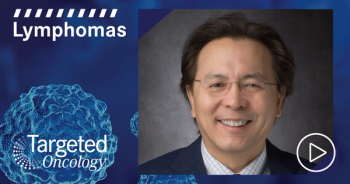
Dr Michael Wang Traces MCL Therapy Evolution Before CAR T
Author(s)Michael Wang, MD
Fact checked by: Andrea Eleazar, MHS
Explore how BTK resistance drives poor outcomes in relapsed mantle cell lymphoma and why ZUMA-2 CAR T therapy emerges as a game-changing option.
In an interview with Targeted Oncology, Michael Wang, MD, The University of Texas MD Anderson Cancer Center, discusses the historical treatment challenges in relapsed/refractory mantle cell lymphoma (R/R MCL) and the unmet need that led to the development of the phase 2 ZUMA-2 (NCT02601313) study.
Read the full interview
For many years, frontline management of MCL relied on intensive chemotherapy regimens and consolidation with autologous stem cell transplant in eligible patients. Despite these aggressive approaches, outcomes were not curative, and most patients eventually relapsed. Subsequent lines of chemotherapy often provided diminishing returns and were associated with substantial toxicity, highlighting a critical therapeutic gap.
The introduction of second-generation Bruton tyrosine kinase (BTK) inhibitors, including acalabrutinib (Calquence) and zanubrutinib (Brukinsa), marked an important step forward, offering improved tolerability and meaningful clinical responses in the relapsed setting. However, resistance to BTK inhibitors remains inevitable for many patients, and once resistance develops, prognosis is poor, with survival often less than 1 year.
To address this unmet need, investigators pursued a novel therapeutic strategy: CD19-directed chimeric antigen receptor (CAR) T-cell therapy. This effort led to the development of brexucabtagene autoleucel (brexu-cel; Tecartus), evaluated in ZUMA-2. As Dr Wang explains, the trial was designed to fill a critical gap for patients with limited options and poor outcomes after BTK inhibitor failure, ultimately reshaping the treatment landscape for R/R MCL.
Related Content
Advertisement