Commentary|Videos|February 25, 2026
Bridging Artificial Intelligence and Precision Oncology for Cancer Care
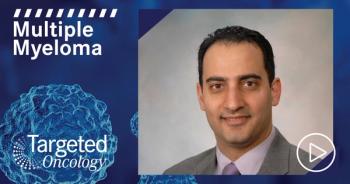
Author(s)Chadi Nabhan, MD, MBA, FACP
Fact checked by: Sabrina Serani
AI accelerates precision oncology, turning genomic data into smarter, targeted cancer treatments, fewer adverse effects, and faster decisions for personalized care.
Chadi Nabhan, MD, MBA, FACP, hematologist-oncologist and the chief medical officer and head of strategy at Ryght.AI, explores the intersection of artificial intelligence (AI) and precision medicine, expanding on the insights regarding the future of oncological care.
Nabhan begins by acknowledging the overwhelming presence of AI in modern discourse. It is no longer a topic reserved for niche tech journals; rather, it permeates mainstream media, newspapers, and daily conversations at an almost breathless pace—appearing not just every day, but seemingly every minute. In the context of global health, Nabhan asserts that AI is not merely a passing trend but a foundational pillar that will redefine how we approach healthcare broadly and cancer care specifically. As an inherently innovative technology, AI offers a new lens through which the medical community can view complex biological data.
A significant portion of the discussion focuses on the rapid evolution of precision oncology. Nabhan defines this paradigm shift as a move away from the "one-size-fits-all" approach of traditional treatments. Instead, precision oncology focuses on the granular level of care:
- Identifying Biomarkers: Pinpointing specific genetic mutations or proteins unique to a patient’s tumor.
- Targeted Drug Development: Engineering therapies designed to interact specifically with those identified targets.
- Reducing Toxicity: By attacking only the cancer cells and sparing healthy tissue, clinicians can provide patients with more effective outcomes while significantly reducing the grueling side effects often associated with systemic treatments like standard chemotherapy.
Nabhan’s primary objective is to bridge the gap between this cutting-edge technology and the practical realities of oncology. He candidly admits that while most medical professionals are not "techies" or software developers, they possess enough knowledge to engage in the conversation. The speaker highlights a common middle ground: clinicians know enough about AI to understand its potential, even if they aren't writing the code themselves.
The goal is to challenge the audience to think differently. By merging the innovative power of AI with the biological accuracy of precision oncology, Nabhan invites oncologists to imagine a new era of medicine. In this future, AI doesn't just process data—it acts as a catalyst, helping doctors navigate vast genomic landscapes to find the right treatment for the right patient at the right time.
Related Content
Advertisement