
Timothy S. Pardee, MD, discusses comorbidities, age, and outcomes among intensively treated patients with acute myeloid leukemia (AML).
Timothy S. Pardee, MD, discusses comorbidities, age, and outcomes among intensively treated patients with acute myeloid leukemia (AML).
In the spring of 2014, a search of the clinicaltrials.gov web site with the key words acute myeloid leukemia and phase II, III returned a list of just over 340 open studies. Most of those trials involving novel agents can be grouped into 1 of 2 general categories: immunomodulators or kinase inhibitors.
B-cell malignancies include non-Hodgkin lymphomas (NHL) and chronic lymphocytic leukemia (CLL). NHLs are a heterogeneous group of more than 30 cancers of B lymphocytes and T lymphocytes.
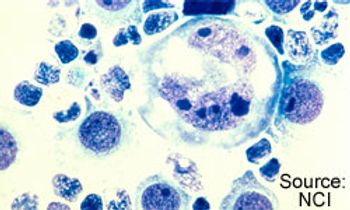
Follicular lymphoma is the malignancy of germinal center B cells in the lymph nodes. It is the second most commonly diagnosed non-Hodgkin’s lymphoma, accounting for approximately 35% of all such cases.

John C. Byrd, MD, a professor of Medicine at The Ohio State University Comprehensive Cancer Center, discusses resistance to ibrutinib.
Anas Younes, MD, chief, Lymphoma Service, Memorial Sloan Kettering Cancer Center, discusses IPI-145 and ABT-199 for the treatment of lymphoid malignancies.

Creating new treatment options for CLL, particularly for high-risk patient populations such as those with fludarabine-refractory disease or with 17p deletions, is the goal of an intense effort by clinical researchers and pharmaceutical companies.

A Q&A with Jacqueline Claudia Barrientos, MD, assistant professor at Hofstra North Shore-LIJ School of Medicine, New York.